The SEO Evolution from Search to Answers: How AI Mode Is Changing the Rules
- Ray Velasquez

- Sep 4, 2025
- 3 min read

Google isn’t just updating its search engine. It’s re-engineering the way we find, understand, and act on information; the very nature of "Googling" something is evolving.
With the rollout of AI Mode, we’ve officially entered the Age of Answers. To get to the point (digital marketers, business owners, etc.), that means your old SEO playbook is no more.
Here’s what’s happening, and how to adapt before you’re left behind with the traditionalists.
From Keywords to Conversations
Traditional SEO was built around matching queries to keywords. Simple, right?
But AI Mode doesn’t just search, it synthesizes. Powered by Google’s Gemini model, it pulls insights from sources to deliver a direct, conversational answer—often with no need for the user to click anywhere else. Hence the previous emphasis on answers, no more "just browsing."
This is the reality behind zero-click search, a trend that now accounts for 60%+ of all queries, and even higher on mobile.
Instead of ranking for visibility, the new game is competing to be referenced by AI itself.
Welcome to GEO: Generative Engine Optimization
To adapt, marketers are already shifting from SEO to GEO. It's about becoming the source of truth AI systems turn to. No more stuffing keywords or backlink chasing, instead earning citations in AI responses through content that is:
Comprehensive – Covers the topic thoroughly, anticipating questions
Credible – Rooted in firsthand expertise, data, or original insight
Clear – Structured and readable, with proper headings and markup
Conversational – Written in natural, human language
If you want visibility these days, you need to be trusted by AI.
What’s Actually Changing (and What to Do About It)
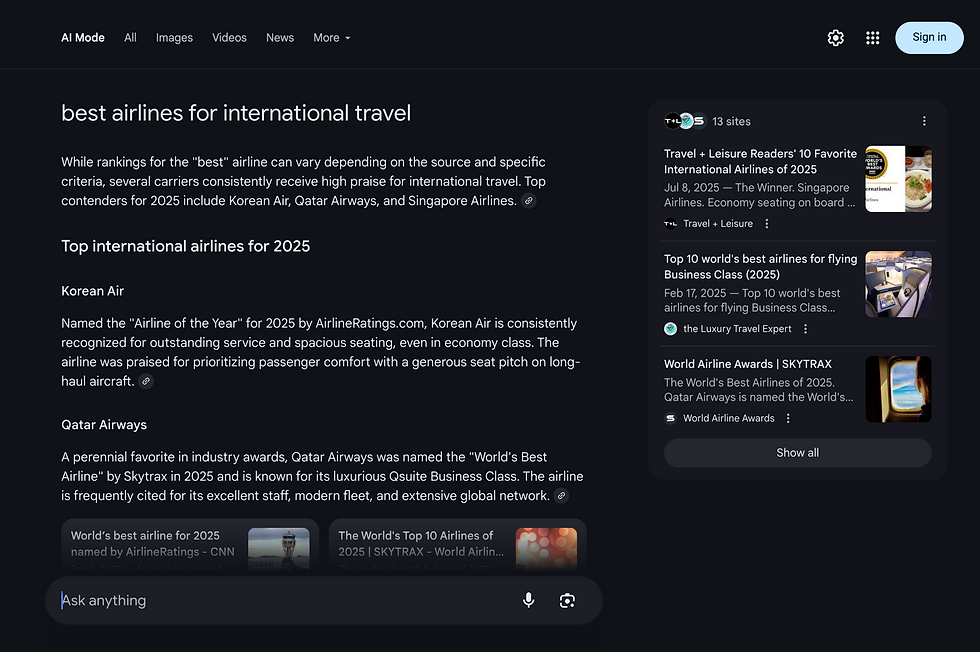
Here’s a breakdown of what’s shifting, and strategies to match:
1. Search Is Becoming Answer-Led
🔍 Then: Users clicked results to explore websites
🤖 Now: AI presents a full answer above the fold
Action: Turn content into answer-friendly blocks. Use FAQs, summaries, and clear headings. Be the content AI loves to cite.
2. CTR Is Dropping, But Quality Is Rising

📉 AI Overviews have slashed click-through rates—some studies show a 34%+ decline
📈 But the users who do click tend to be more ready to act
Action: Shift your focus. Prioritize conversion quality, not just traffic volume.
3. Schema Markup Is Now a Must
Structured data (FAQPage, HowTo, Product, Article) gives AI engines the context they need to include you.
Action: Audit your pages for schema implementation. If your CMS doesn’t support it, get one that does.
4. Voice and Natural Language Are the Norm
Search queries are more conversational, and so are AI responses.
Action: Optimize for questions. Use headings like “How does [X] work?” or “What’s the best way to [Y]?” to match user intent.
5. Google Is Just One of Many AI Platforms

Users are now turning to ChatGPT, Perplexity, Claude, and more for search.
Action: Build cross-platform visibility. Optimize content so it’s accessible, structured, and cite-worthy across platforms—not just Google.
How to Future-Proof Your Website Right Now
Run an AI Visibility Audit – Citations, AI pull-through, and schema coverage
Refresh top-performing pages with deeper content, better structure, and you guessed it—clearer answers
Implement or upgrade schema markup on every major page
Create content clusters to build authority around key topics
Track your presence in AI Overviews and learn what formats they prefer
This Is the Most Disruptive Shift Since PageRank
If your business depends on search traffic, don’t wait. The traditional path of SEO is narrowing. But a new one is opening for those willing to lead with quality, authority, and AI-friendly structure.
AI Mode is here, the rules have changed, and the winners will be those who show up when the answers are being written.
📩 Want help adapting your strategy? Reach out to scoremarketerteam@gmail.com
🔍 Or learn more about our Advanced Growth Audit at www.ScoreMarketer.com


Comments